


How to Read Supplement Labels: A Simple Guide to Choosing Better
Choosing food supplements can be complicated, but understanding the labels makes everything much easier. The label is the "identity card" of a supplement: it tells you whether the product is safe, if the dosage makes sense, if the ingredients are of high quality, and even if the brand is transparent.
Many people in Portugal buy supplements based on recommendations from friends, social media, or attractive packaging — but the secret really lies in the label. This guide explains, in a practical and human way, how to interpret food supplement labels to make more conscious choices.
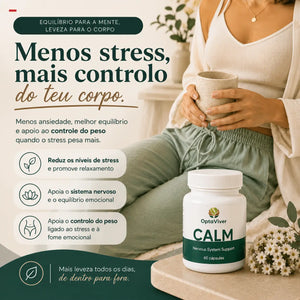
Discover the OptaVida Calm Relax Blend

Why knowing how to read a label is so important
The label is where the brand shows everything: quality, transparency, safety, and the actual dosage of the ingredients. When you know what to look for, you avoid:
- weak supplements
- insufficient dosages
- "decorative" mixtures with no effect
- misleading promises
- illegal or poorly formulated supplements
It is the simplest way to distinguish a good supplement from a mediocre product.
What a food supplement label must include by law in Portugal
1. The phrase “food supplement”
This guarantees that you are buying a supplement, not a medicine, tea, or other product.
2. Full list of ingredients
Includes everything inside the capsule or powder: vitamins, minerals, plants, excipients, etc.
3. Composition per dose
This must include:
- amount per capsule or per dose
- % of the recommended daily intake
- chemical form (e.g., magnesium bisglycinate, iron bisglycinate, etc.)
The chemical form is very important — it has a direct impact on absorption.
4. Recommended daily dose
It is mandatory to indicate how many capsules you can take per day.
5. Warnings
- “Do not exceed the recommended dose”
- “Does not replace a varied diet”
- “Keep out of reach of children”
6. Batch number, expiry date, and company details
This allows for traceability and safety.
How to analyze supplement quality through the label
1. Check the form of the ingredients
Examples:
- magnesium bisglycinate > magnesium oxide
- iron bisglycinate > iron sulfate
- phytosomal curcumin > simple curcumin
Better forms mean superior absorption.
Tip: For ingredients with high bioavailability, explore our complete collection of supplements.
2. Check the dosage
Too low a dose = no effect.
Too high a dose = may be unsafe.
Balance is essential.
3. Be wary of proprietary blends
Terms like:
- “exclusive blend”
- “proprietary blend”
- “advanced complex”
usually hide low dosages. A transparent brand shows the dose of each ingredient.
4. Check if the function of the ingredients is explained
- they explain why they use certain ingredients
- they indicate scientific evidence when applicable
- they do not promise a "cure" or impossible results
5. Check if the label is clear, legible, and consistent
If the brand doesn't invest in a clear label, it's unlikely they invest in a good product.
What common terms found on labels mean
“Excipients”
These are substances used to stabilize the capsule. They are not the active ingredient.
“Dry extract”
Indicates plant concentration. A 10:1 extract means that 10g of the plant produces 1g of extract.
“% NRV”
Nutrient Reference Value — shows what percentage of the recommended daily intake is present.
“Oral use”
Indicates that the supplement is taken by mouth.
Common mistakes when reading supplement labels
- thinking more ingredients = better supplement
- ignoring the (chemical) form of the ingredients
- not realizing that microdoses make no difference
- relying on “mega-formulas” with 20 ingredients
- not analyzing the brand and its reputation
Looking for simple but effective formulas? See OptaVida Anti-Stress Formula.
Quick Guide to Choosing a Reliable Supplement
- clear and complete label
- transparent dosages
- bioavailable forms
- ingredients with a real function
- no miracle promises
- company with contact information and a presence in Portugal
Conclusion — Reading labels completely changes the way you choose supplements
Once you understand these steps, it is much easier to identify:
- quality supplements
- appropriate dosages
- real ingredients
- serious brands
A label says it all — you just need to know how to read it.
Want to start with quality supplements? See all products at: Complete OptaViver Collection

Obtenha o nosso
Newsletter
Subscribe to our newsletter to receive exclusive offers.
